

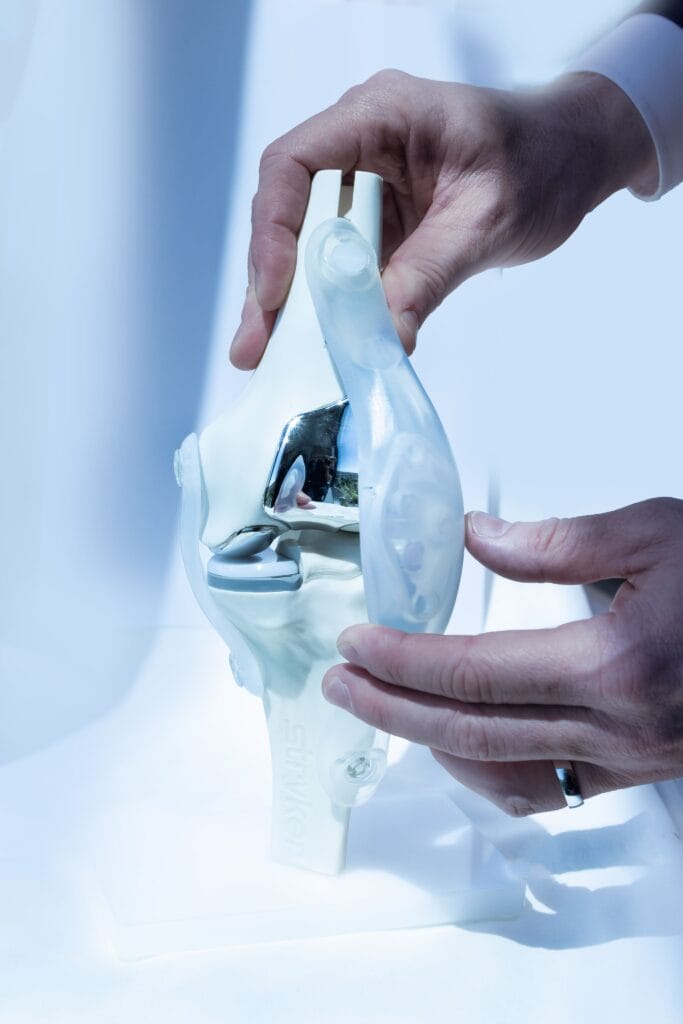
Knee osteoarthritis is a common cause of knee pain and stiffness, affecting many Australians as they get older or after previous injuries such as ligament or meniscus tears. In osteoarthritis, the smooth cartilage that lines the knee joint gradually wears down, causing the bones to rub together and leading to pain, swelling and reduced function.
Symptoms often develop slowly and may include aching with activity, morning stiffness, swelling after longer walks and difficulty with stairs or getting up from a chair. Over time, people may notice reduced walking distance, loss of confidence on uneven surfaces and a gradual impact on day-to-day activities.
Management is tailored to the individual and usually starts with non-surgical strategies. These include education, weight optimisation, physiotherapy, targeted exercises to strengthen the muscles around the knee and activity modification to reduce load on the joint.
Research shows that patient education and exercise therapy together can improve pain and function and help people stay active for longer. Simple, low-impact exercises such as cycling, walking on flat ground and water-based exercise are often recommended as part of a long-term plan.
When pain remains significant despite these measures, options such as injections, osteotomy or partial/total knee replacement may be considered. A specialist knee surgeon can help determine the most appropriate timing and type of surgery based on symptoms, X-rays, lifestyle and goals.