

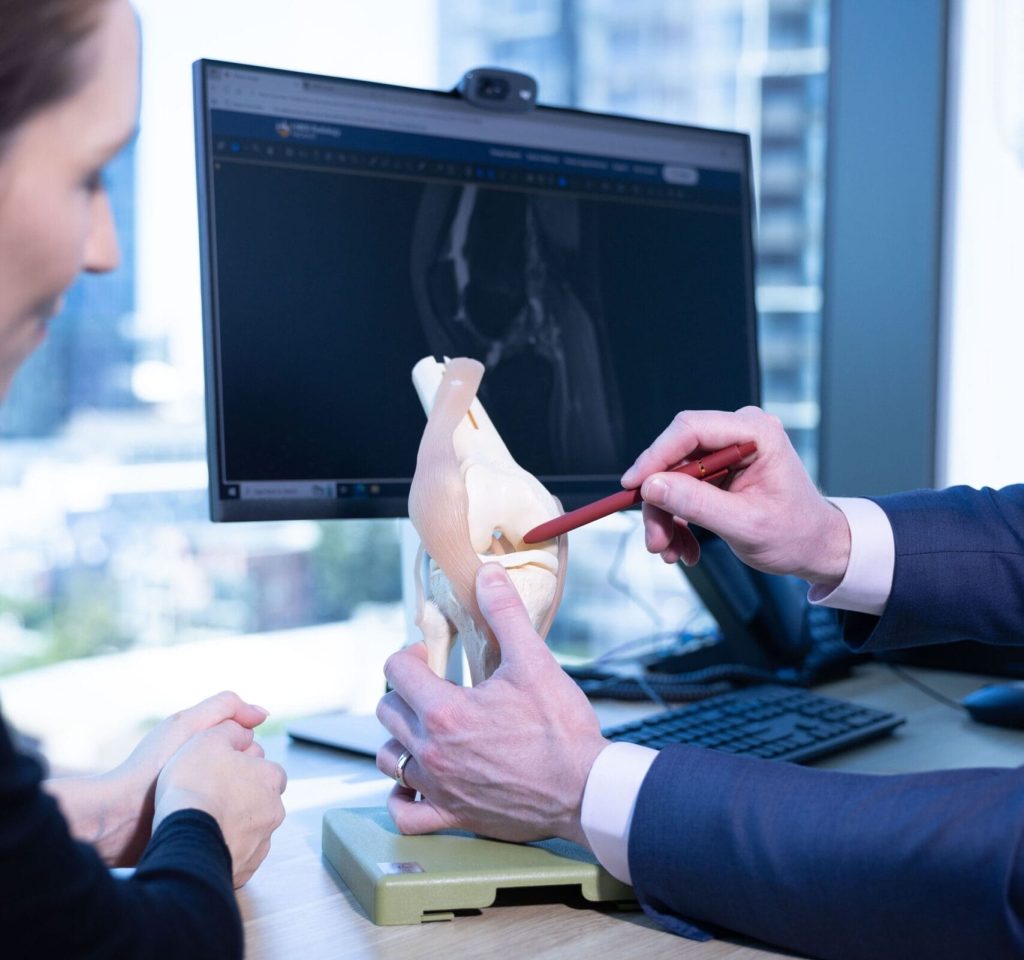
The menisci are two C-shaped cartilage structures within the knee joint, located between the thigh bone (femur) and shin bone (tibia). There are two menisci in each knee:
Viewed in cross-section, they are wedge-shaped to provide a stable fit between the round end of the femur and the flat top of the tibia. The menisci act as vital shock absorbers, helping to distribute load and reduce wear on the articular cartilage. They also contribute to the stability of the knee joint.
Meniscus tears are among the most common knee injuries and can be classified into two main types:
Typical symptoms depend on the tear location and type:
Degenerative tears may present with similar symptoms but often develop gradually with more persistent, constant pain related to underlying arthritis.
The meniscus is a crucial structure in the knee that helps absorb load and provide stability. Meniscus tears can be highly variable, and treatment depends on the type of tear, symptoms, as well as the individual needs and demands of each patient. Some tears are suitable for non-operative treatment whilst other tears may require surgery.
Non-surgical treatment may include rest, physiotherapy, and possibly injection therapy for suitable tears.
When surgery is necessary, Dr Free strongly advocates for meniscus preservation. He combines expert care with the latest evidence-based meniscus repair techniques to maximise healing potential and preserve long-term knee function. His personalised approach ensures each patient receives a treatment plan tailored to their unique tear pattern, lifestyle, and recovery goals.
Dr Matthew Free offers expert, personalised solutions for every step of the journey.