

In a healthy knee, the joint surfaces are covered with smooth cartilage, acting as a natural cushion to absorb shock and allow friction-free movement. Knee arthritis causes progressive cartilage loss, leading to pain, stiffness, swelling, and reduced mobility. These symptoms can significantly impact daily activities, work, and overall quality of life.
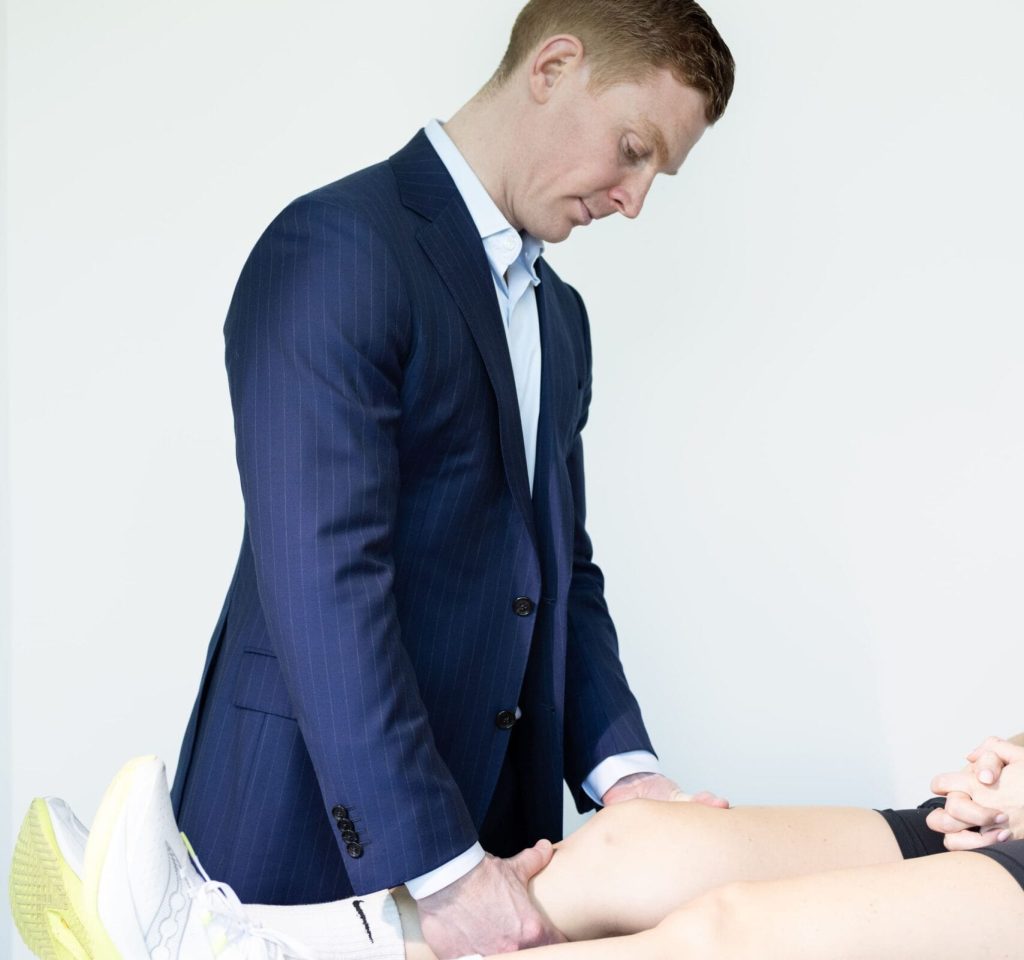
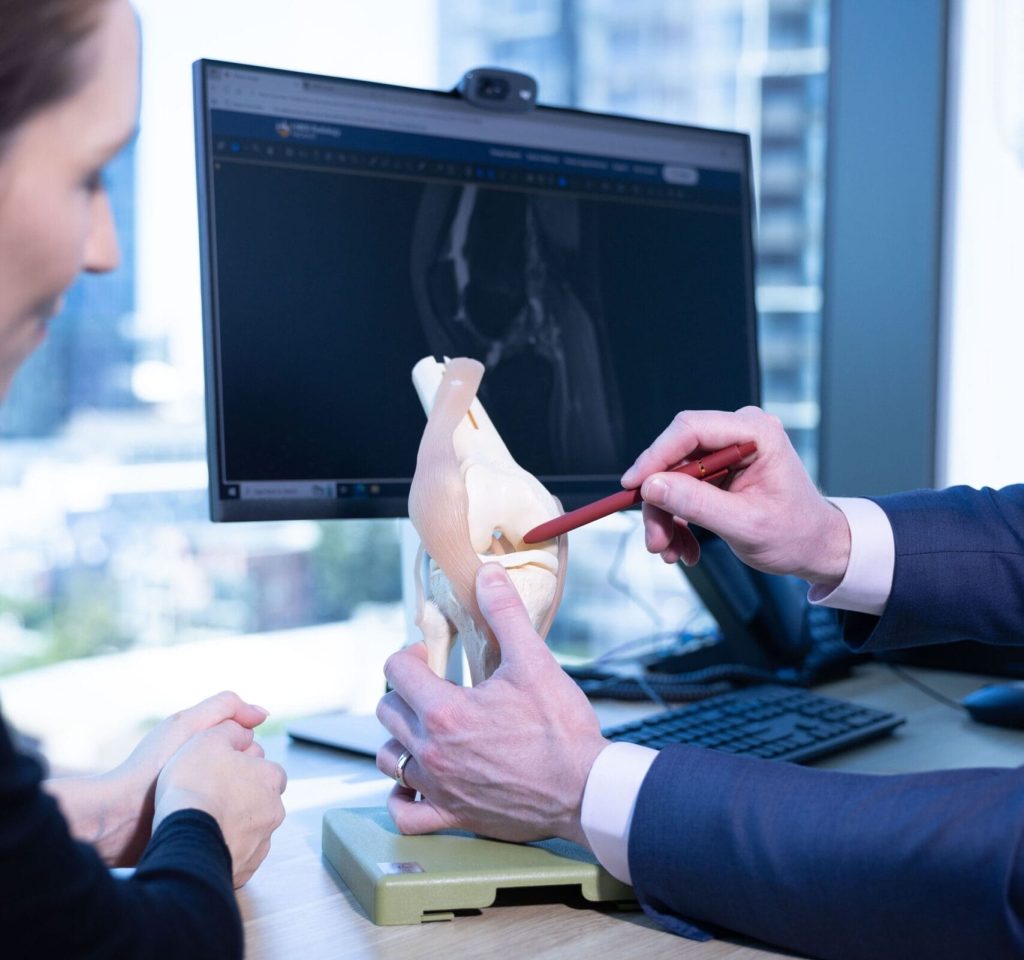
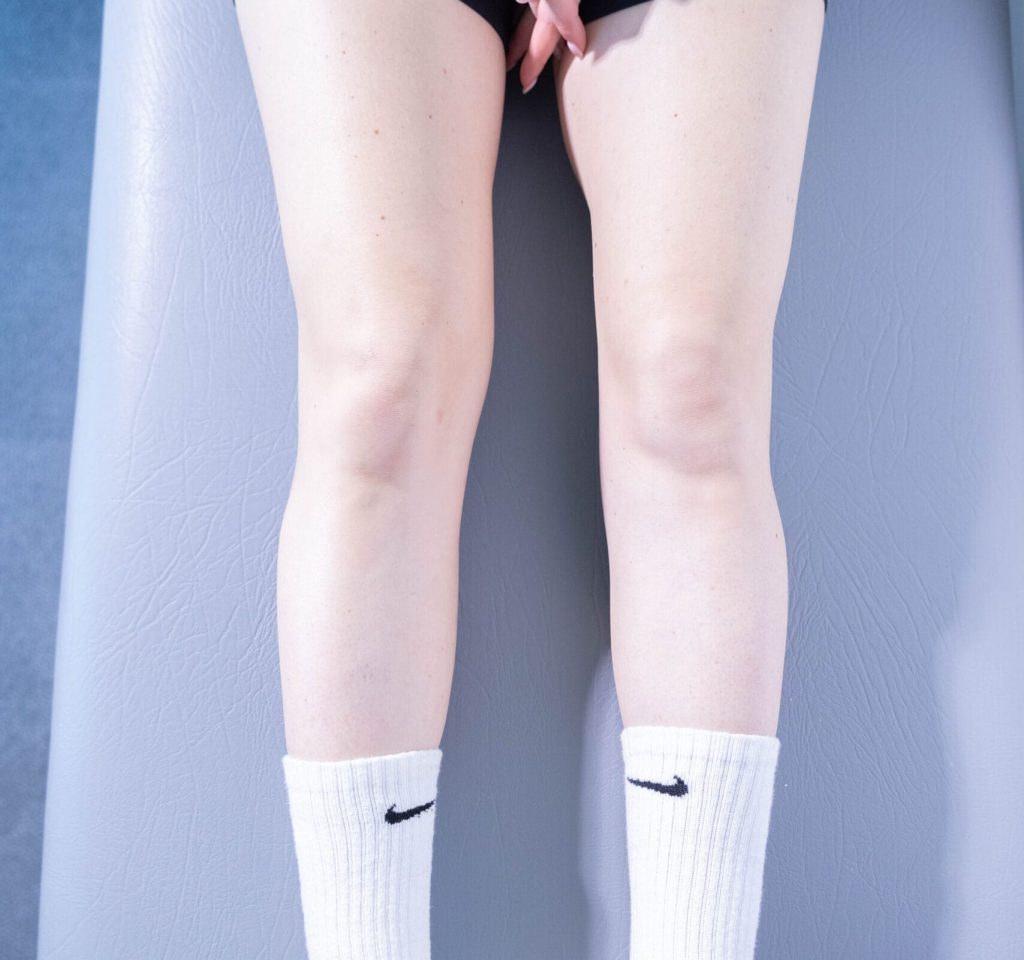
Total knee replacement surgery (also called total knee arthroplasty) is designed to relieve pain, restore function, and improve mobility by replacing the damaged joint surfaces with a high-quality artificial implant. In selected patients where osteoarthritis affects only one compartment of the knee, a partial knee replacement may be a suitable alternative.
A total knee replacement involves removing the damaged cartilage and a thin layer of underlying bone from the end of the femur (thighbone), top of the tibia (shinbone), and if required, the underside of the kneecap (patella). These surfaces are replaced with precisely shaped metal and medical-grade polyethylene (plastic) implants that replicate the natural contours and movement of the knee.
Advanced techniques such as computer navigation or robotic-assisted knee replacement surgery may be used to ensure highly accurate bone preparation and implant positioning and alignment.
While the surgeon maintains full control during the operation, the use of robotic assistance provides millimetre-accurate planning and execution, improving precision in bone preparation and implant placement. Dr Free has completed international fellowship training in robotic knee replacement surgery and will explain the process, benefits, and any potential risks during your consultation.
Pre-operative preparation – See the pre-operative information page for general guidelines
Day of surgery – You will be admitted on the morning of the operation. Our team will provide fasting instructions and admission details.
Anaesthesia – Partial knee replacement can be performed under general or spinal anaesthesia. The anaesthetist will contact you before surgery to discuss your options.
Hospital stay – Most patients stay 1-3 days.
Early mobilisation – Walking with assistance typically begins on the day of surgery
Pain management – Medication is provided to keep you comfortable
Wound care – A waterproof dressing will be applied. If it remains clean and intact, it can stay in place until your two-week follow-up.
Rehabilitation after ACL surgery is essential for a successful recovery and optimal outcome. Dr Free strongly advocates a collaborative approach to ACL rehabilitation and works closely with a trusted team of physiotherapists dedicated to helping you reach the best possible results. The structured rehabilitation program includes:
You’ll receive a rehabilitation protocol from our friendly team to guide your recovery.
Dr Free brings advanced international fellowship training and extensive experience in total and robotic-assisted knee replacement surgery. Combining cutting-edge technology with personalised care, he ensures precise implant placement and alignment for optimal knee function and long-term durability. Dr Free is committed to guiding patients through every stage – from surgical planning to rehabilitation – to achieve the best possible outcomes and restore quality of life.
What are the risks of knee replacement surgery?
Total knee replacement is a well-established and generally safe procedure, but like all surgeries, it carries potential risks. Understanding these risks can help you make an informed decision and prepare for your recovery.
This will vary depending on the nature of your work. If your job is sedentary or office-based, you may return as early as 6 weeks post-surgery. For more physically demanding jobs, this may take 3-4 months. Dr Free will discuss this in more detail with you prior to surgery and will continue to assess your progress during follow-up visits to help guide a safe return to work.
Most patients can return to driving approximately 6 weeks after a total knee replacement. You must be off strong pain relief medications, be walking without crutches, and have a comfortable pain-free motion of your knee before you commence driving. Always check with Dr Free before getting behind the wheel.
Keep the surgical wound dry until your 2-week post-operative review. After this, you may shower without a dressing. Swimming pools, spas, and hot tubs should be avoided for at least 3-4 weeks to reduce infection risk.
Yes, the metal components can trigger security alarms. This is common, and airport staff are accustomed to it. Simply inform them you have a joint replacement if questioned.
Results from our national joint registry show that 90-95% of replacements are still functioning well at 15 years post-surgery. Most knee replacements can now be expected to last beyond 20 years, however for patients younger than 65 years at the time of surgery, the risk of needing revision surgery is slightly higher.
Dr Matthew Free offers expert, personalised solutions for every step of the journey.