

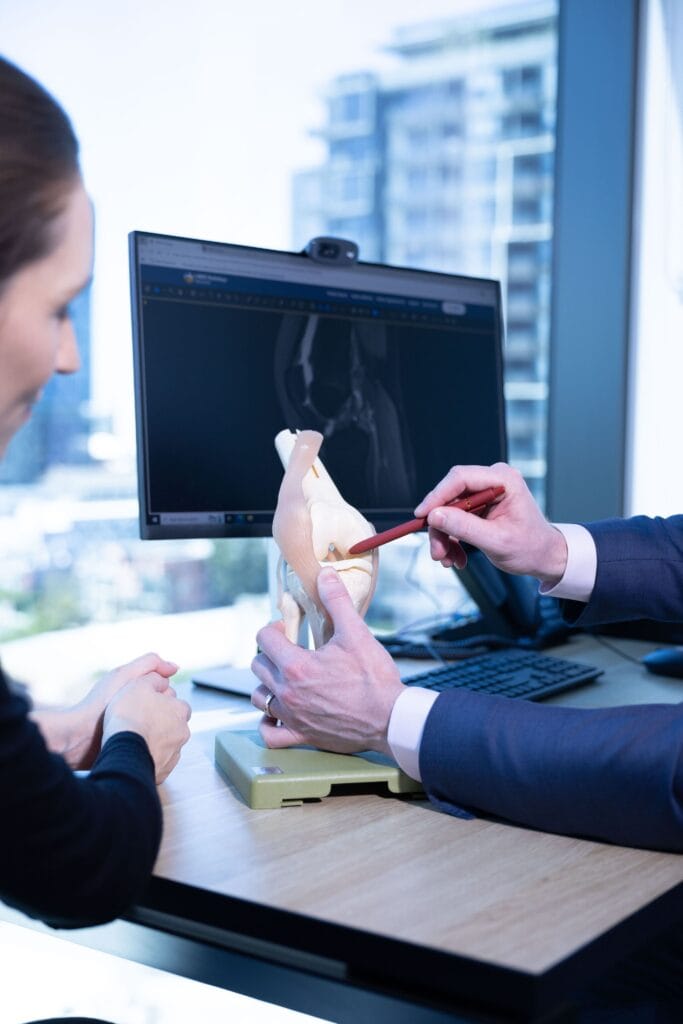
An ACL tear is one of the most common knee injuries, particularly in sports involving running, cutting and pivoting such as AFL, soccer, netball, basketball and skiing. The anterior cruciate ligament (ACL) is a key stabiliser of the knee, helping control rotation and forward movement of the shin bone. When it is torn, it can significantly affect knee stability, confidence and athletic performance.
What is an ACL Tear?
The ACL is one of the main ligaments within the knee joint. It plays a critical role in stabilising the knee during twisting and high-demand movements.
Most ACL injuries occur without direct contact, often when:
- The foot is planted and the body twists
- There is sudden deceleration or change of direction
- Landing awkwardly from a jump
ACL Tear Symptoms
One of the most common questions is: how do you know if you’ve torn your ACL? Patients with an ACL tear commonly report:
- A “popping” sensation at the time of injury
- Rapid swelling within the first few hours
- Pain and reduced range of motion
- A feeling of the knee “giving way”, especially when turning or on uneven ground
These symptoms can vary, and some patients are able to walk shortly after injury despite a complete tear.
How is an ACL Tear Diagnosed?
Diagnosis involves a combination of clinical examination to assess knee stability, and MRI scan to confirm the ACL tear and identify associated injuries. Associated damage to the meniscus or cartilage is common and can influence treatment decisions.
Do You Need Surgery for an ACL Tear?
Not all ACL tears require surgery. However, surgery is often recommended for:
- Patients wanting to return to pivoting or contact sports
- Those experiencing ongoing knee instability
- Individuals with certain associated injuries (e.g. meniscus tears)
Patients who modify their activity and avoid high-risk movements may be able to manage successfully with structured rehabilitation alone.
Early assessment by a specialist knee surgeon helps determine the most appropriate approach based on your goals, lifestyle and knee stability.
ACL Tear Treatment Options
1. Non-operative management
- Structured physiotherapy program
- Focus on strength, control and stability
- Suitable for selected patients with lower activity demands
- The most common surgical treatment
- Uses a tendon graft to reconstruct the ligament
- Aims to restore stability and allow return to sport
3. ACL repair
- An option in selected tear patterns
- Preserves the native ligament
- Not suitable for all patients
The best treatment depends on:
- Age and activity level
- Type of sport
- Degree of instability
- Associated injuries
- Personal goals
Recovery After an ACL Tear
Rehabilitation is critical whether surgery is performed or not. Key goals include:
- Restoring range of motion
- Rebuilding strength (especially quadriceps and hamstrings)
- Improving balance and neuromuscular control
- Progressing to sport-specific movement
An ACL tear is one of the most feared knee injuries, but with the right treatment and rehabilitation, many patients return to high-level sport.
Return to Sport After ACL Injury
Return to sport is not based on time alone. Instead, it is guided by:
- Strength testing
- Functional performance
- Movement quality
- Psychological readiness
For patients undergoing ACL reconstruction, return to sport typically occurs around 9–12 months, with the aim of minimising re-injury risk.
See Returning to Sport After ACL Reconstruction for more information.
When to See a Knee Specialist
If you’ve injured your knee and are experiencing:
- Instability
- Swelling
- Difficulty returning to sport
Early assessment by an experienced Melbourne ACL surgeon can help confirm the diagnosis and guide appropriate treatment. For patients with an ACL tear in Melbourne, a tailored approach is essential to safely return to sport while protecting long-term knee health.