

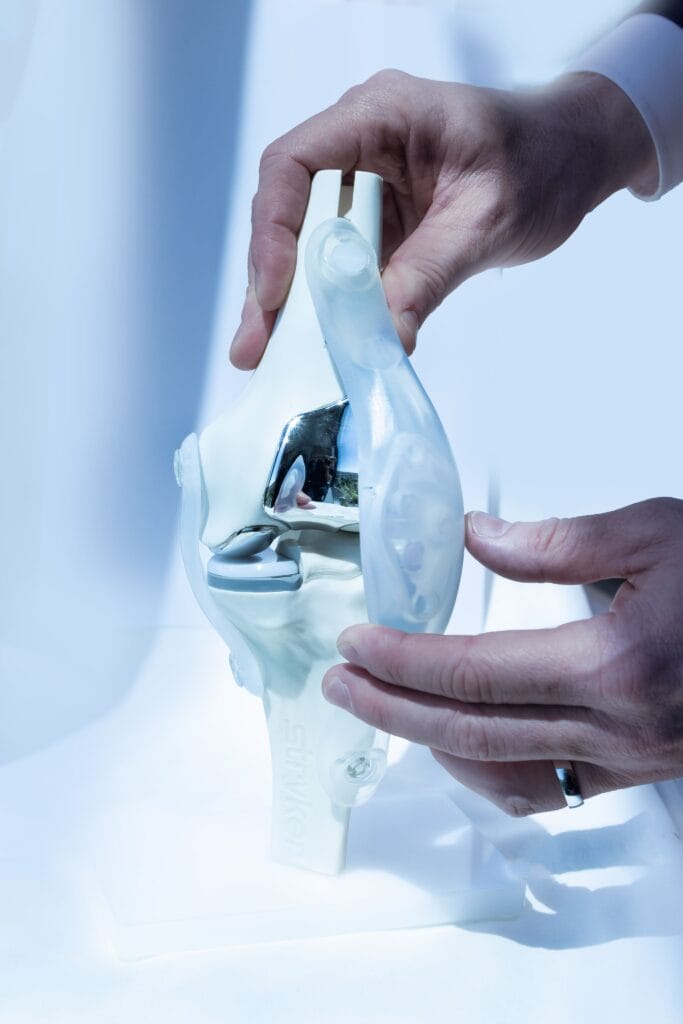
Knee osteoarthritis is one of the most common causes of knee pain and stiffness, particularly as people get older or following previous injuries such as ACL or meniscus tears.
Many patients ask: “Is my knee pain just wear and tear, or something that can be treated?”
Osteoarthritis is a manageable condition. With the right approach, many patients can reduce pain, improve function, and stay active for years.
What is Knee Osteoarthritis?
Knee osteoarthritis is a condition where the smooth cartilage lining the joint gradually wears down over time. This cartilage normally allows the knee to move smoothly and absorb load.
As it deteriorates:
- The joint surfaces become less smooth
- Load is transferred less efficiently
- Inflammation can develop
This leads to pain, stiffness, swelling and reduced function. Osteoarthritis can develop gradually with age, but it is also more common after previous knee injuries, particularly ligament injuries or meniscus tears.
Common Symptoms of Knee Osteoarthritis
Symptoms often develop slowly and may vary between individuals. Common features include:
- Aching pain with activity
- Morning stiffness or stiffness after rest
- Swelling, particularly after prolonged walking or standing
- Difficulty with stairs, squatting, or getting up from a chair
- Reduced walking distance or endurance
- Loss of confidence on uneven ground
Over time, these symptoms can begin to impact day-to-day activities and overall quality of life.
How is Knee Osteoarthritis Managed?
Management is individualised and usually begins with non-surgical strategies. The goal is to reduce pain, improve function, and maintain activity.
1. Education and Activity Modification
Understanding the condition is key. Small changes to daily activities can reduce excessive load on the knee while keeping you active.
2. Exercise and Physiotherapy
Targeted strengthening, particularly of the quadriceps and surrounding muscles – helps support the knee and improve function. Exercise is one of the most effective treatments for knee osteoarthritis.
3. Weight Optimisation
Even modest weight loss can significantly reduce stress on the knee joint and improve symptoms.
4. Low-Impact Activity
Activities such as:
- Cycling
- Walking on flat ground
- Swimming or water-based exercise
Do You Need Surgery for Knee Osteoarthritis?
Most patients do not require surgery, particularly in the early stages.
However, surgical options may be considered when:
- Pain remains significant despite appropriate non-surgical treatment
- Function is increasingly limited
- Symptoms are impacting quality of life
Options may include:
- Injections (for symptom relief)
- Osteotomy (to realign the knee in selected patients)
- Partial or total knee replacement
The most appropriate treatment depends on symptoms, X-ray findings, activity level and individual goals.
When to See a Knee Specialist in Melbourne
If you are experiencing knee osteoarthritis in Melbourne, you should consider specialist assessment if you experience:
- Persistent knee pain
- Swelling or stiffness affecting daily activities
- Difficulty staying active
- Limited improvement with physiotherapy
For patients with knee arthritis in Melbourne, early assessment allows for a tailored management plan and helps avoid unnecessary progression of symptoms.
Key Takeaway
Knee osteoarthritis is a common and manageable condition. A combination of education, targeted exercise, and appropriate treatment can significantly improve pain and function.
If symptoms persist, assessment by an experienced Melbourne knee surgeon can help guide the right treatment options based on your individual goals and lifestyle.