

The anterior cruciate ligament (ACL) is one of the main stabilising ligaments in the knee. It attaches to the thigh bone (femur) and to the shin bone (tibia). It plays a critical role in controlling knee movement, particularly preventing excessive forward movement of the tibia as well as controlling rotational motion of the knee. It is especially important during activities that involve sudden stops, pivoting or quick changes direction.
ACL tears are common, particularly in sports. Most injuries occur without direct contact, when the knee twists sharply while the foot is planted — for example:
Less often, ACL tears result from direct contact, a fall, or a traumatic accident. They are particularly common in sports such as AFL, soccer, basketball, rugby, and netball.
Typical features include:
Early pain and swelling often improve within 10–14 days, but the knee may remain unstable — especially during pivoting or rapid direction changes. Many people report a persistent lack of confidence in the injured knee.
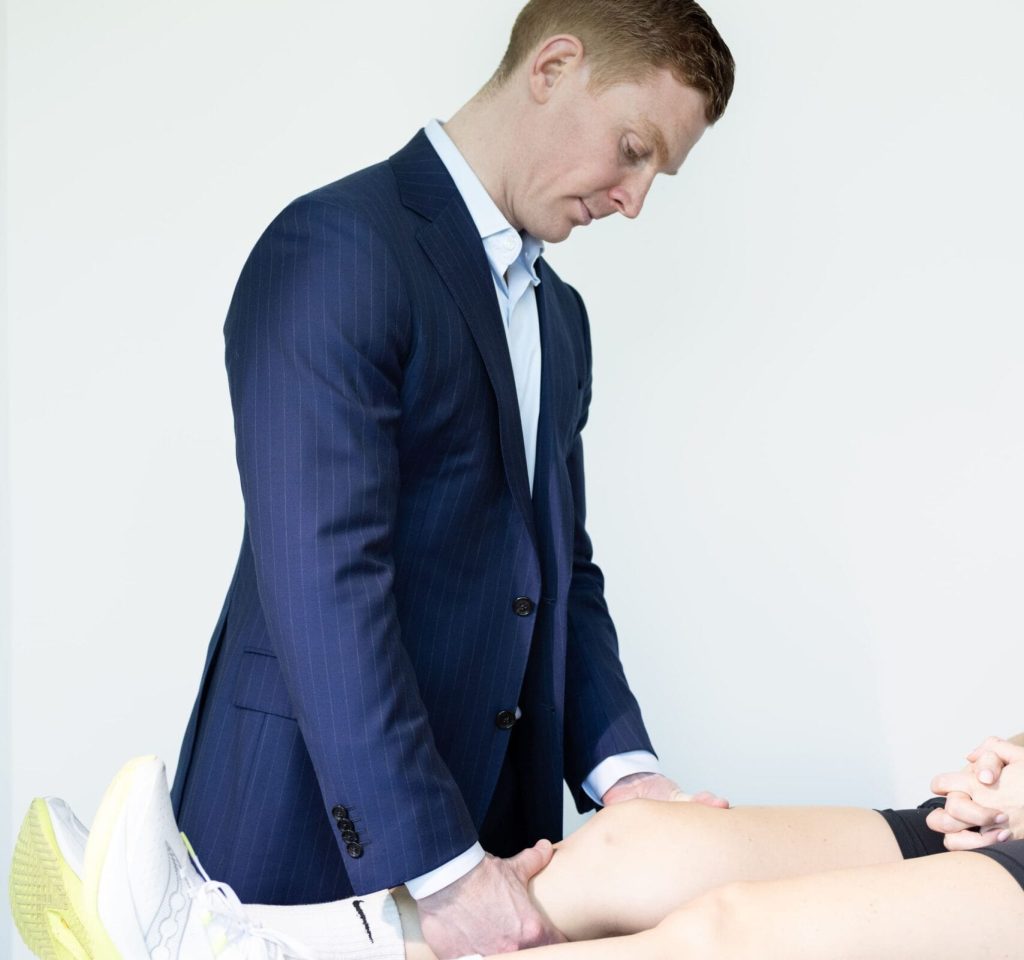
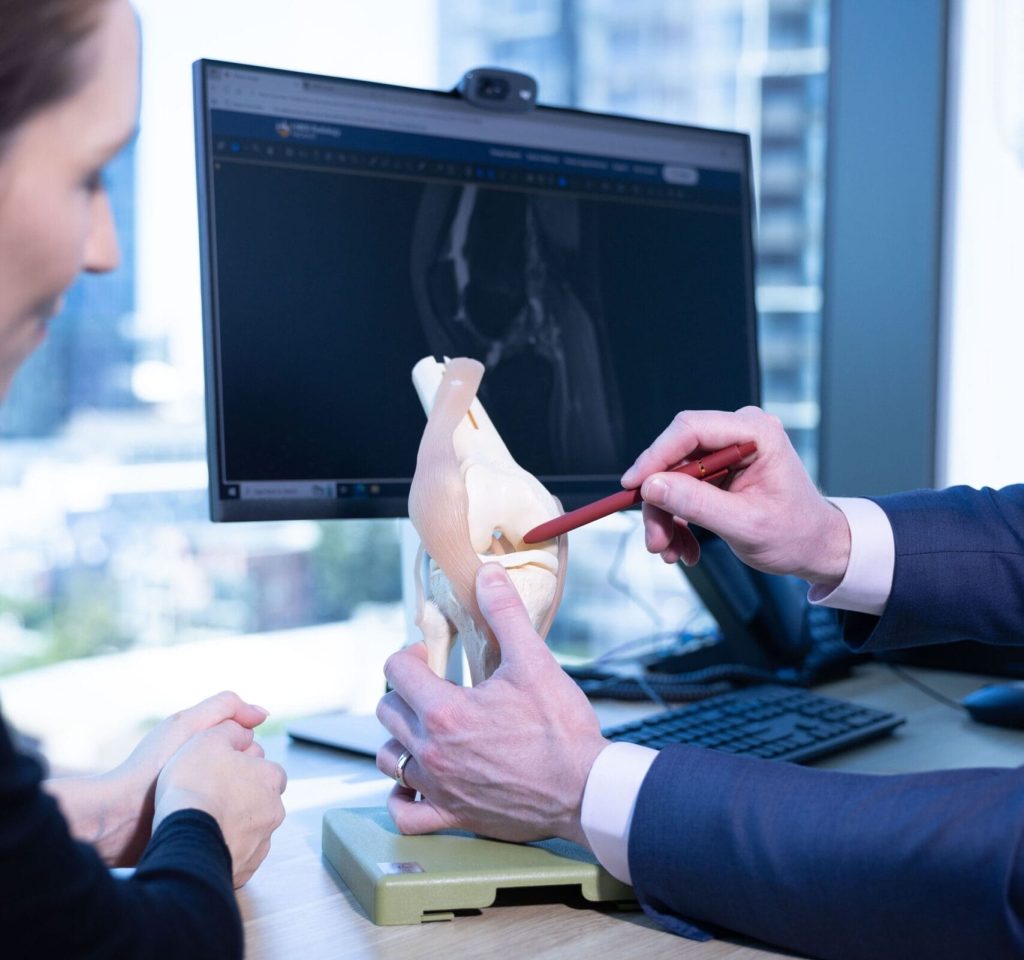
A thorough history and physical examination by an experienced clinician can usually confirm an ACL tear. X-rays and MRI are usually performed to check for associated injuries such as meniscal tears, cartilage damage, or other ligament injuries.
Management of ACL tears is personalised, being tailored to your symptoms, examination, imaging, and personal goals. All patients benefit from physiotherapy to restore motion and strength, whether or not surgery is planned.
Not all ACL tears require surgery. For those who do, ACL reconstruction is the most common procedure. This involves replacing the torn ligament with a graft from your hamstring tendon, patella tendon, or quadriceps tendon, or occasionally donor tissue (allograft). In select cases, Dr Free may recommend ACL repair instead of reconstruction.
For some high-risk patients, Dr Free may recommend adding a LET to ACL surgery. This involves using a thin strip of the iliotibial band (ITB), passed under the lateral collateral ligament (LCL) and fixed to the thigh bone. Research shows that LET can reduce persistent rotational instability of the knee and lower the risk of reinjury to the ACL. During your consultation, Dr Free will discuss whether LET is recommended as part of your ACL treatment plan.
Dr Free is a highly experienced specialist in managing ACL tears, including non-operative treatment, ACL reconstruction, ACL repair, and complex knee ligament surgery. He performs all graft types and will recommend the option best suited to your activity level, specific sport, anatomy, and recovery goals. He has treated patients from international elite athletes to weekend warriors and is committed to personalised treatment and evidence-based care.
Dr Matthew Free offers expert, personalised solutions for every step of the journey.